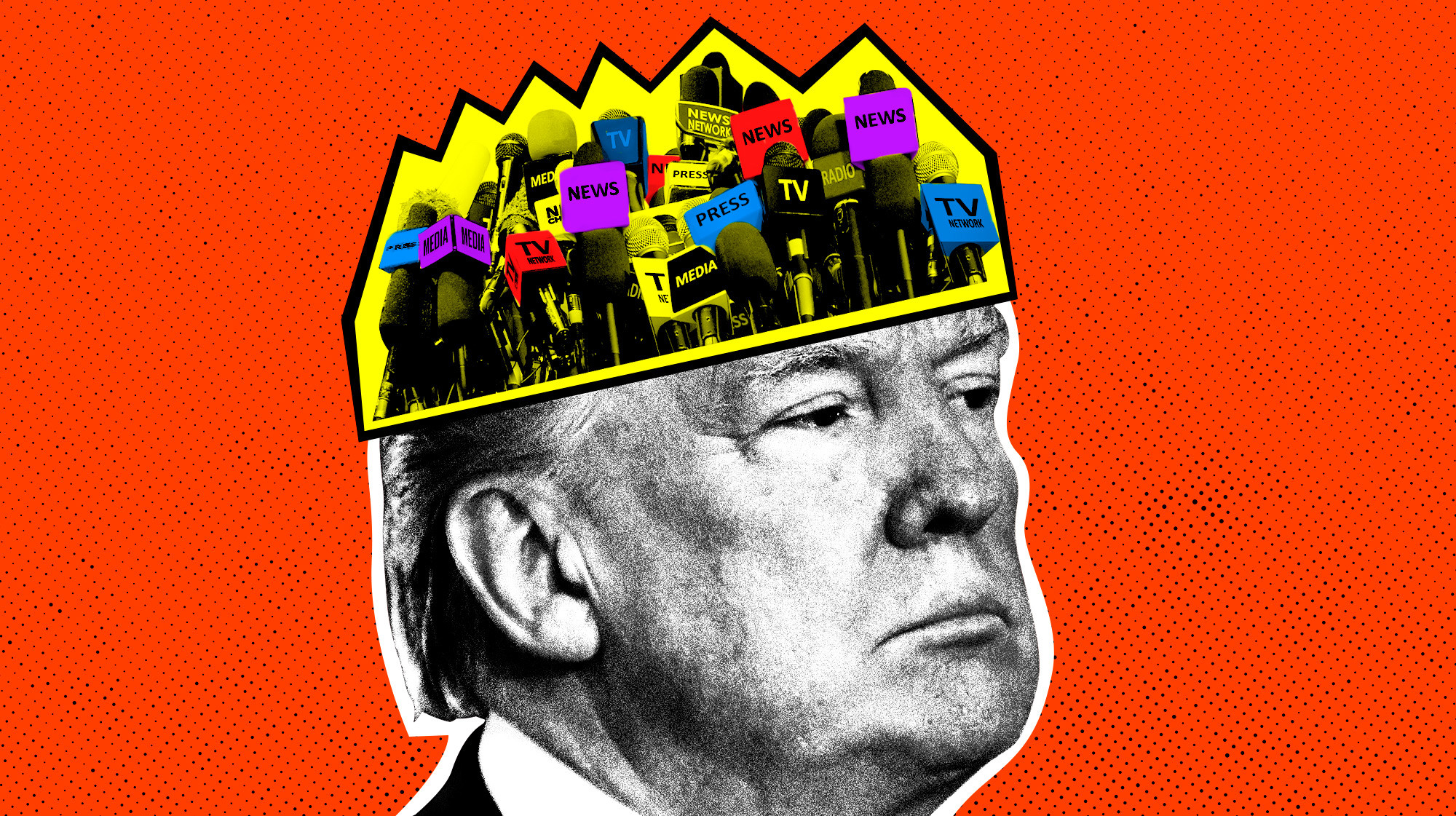
(I borrowed the image from an excellent article in Mother Jones: It’s Time for Journalism to Stand for Something.)
Here’s a surprise. Apparently, despite publishing hundreds of thousands of words every day, the Washington Post and the New York Times show poor reading comprehension. I thought they’d be better, but it explains much of today’s news reporting. And why we end up so confused sometimes.
It’s not new, but right now, I’m talking about the ‘Axios on HBO’ interview. President Donald Trump promised to sign an Executive Order ending the right to US citizenship for people born in the United States to non-citizen parents. Provocative of him, I suppose. Obvious, too, but that’s our current President.
The facts seem simple enough. We already know what Trump (a known and prolific liar) said. Here’s what the Constitution says about it:
All persons born or naturalized in the United States and subject to the jurisdiction thereof, are citizens of the United States and of the State wherein they reside. No State shall make or enforce any law which shall abridge the privileges or immunities of citizens of the United States; nor shall any State deprive any person of life, liberty, or property, without due process of law; nor deny to any person within its jurisdiction the equal protection of the laws.
14th Amendment to the U.S. Constitution, Section 1
A little busy, but clear enough: “All persons born or naturalized in the United States… are citizens of the United States….” Any student of history already knows the violent and racist history of this amendment. It’s not as if the 14th Amendment is a trivial or unexplored part of the Constitution.
A quick reminder: the Constitution takes legal precedence over any laws, which themselves take precedence of any Executive action. The legal status of any EO that conflicts with the 14th Amendment isn’t a mystery.
So, the President of the United States said he’d write an EO that would violate our Constitution. Trump hasn’t done it yet (another fact), and he probably won’t (my opinion). I think it’s most likely Trump only wants to meddle (my opinion) in an election Republicans are predicted to lose badly (current polling fact).
It’s also plausible Trump doesn’t know the Constitution or U.S. history, and that none of his advisers are willing to correct him. So that’s possible, too. It’s just a guess, and I don’t know his motivation. Still, the story is easy enough: Trump vowed he’d do something unconstitutional and possibly racist barely a week before a contested election. Bad, probably bad, unprecedentedly, and possibly (although not probably) criminal.
In the Axios interview, Trump gives us a mix of facts and lies. From that, we all speculate about his almost certain motives, our shared understandings, some strong possibilities, and so on down the line to raw speculation. So, how did the press report this mix?
The Axios website story said, “[Trump’s Executive Order] will set off another stand-off with the courts, as Trump’s power to do this through executive action is debatable, to say the least.”
No, it’s not ‘debatable’, least or otherwise. Not unless you can’t parse the words in the Constitution. That part is easy. We’re comparing Trump, someone who’s a fabulist and compulsive liar, to the written words in the Constitution. Which is valid should be clear. Unless, for some unknown reason, you can’t speak the whole truth.
Not being able to speak the whole truth would be a problem for a news source, wouldn’t it?
“It was always told to me that you needed a constitutional amendment. Guess what? You don’t,” Trump said, declaring he can do it by executive order.
When told that’s very much in dispute, Trump replied: “You can definitely do it with an Act of Congress. But now they’re saying I can do it just with an executive order.”
…
“It’s in the process. It’ll happen … with an executive order.”
–Axios, Oct. 30, 2018, Exclusive: Trump targeting birthright citizenship with executive order.
Is it ‘in dispute’? Being polite in the middle of an interview isn’t a crime, I suppose. Still, here’s how Axios explains it after the President was gone:
Few immigration and constitutional scholars believe it is within the president’s power to change birthright citizenship, former U.S. Citizenship and Immigration Services chief counsel Lynden Melmed tells Axios.
— Ibid.
“Few… scholars believe….” Axios, were the words in the Constitution too big? Can’t you read the Amendment for yourselves? That’s a little odd for a news organization, isn’t it? I’m not a Constitutional scholar, but it’s a simple, declarative sentence.
Axios goes on to quote several Trump Republican conservatives who (surprise, surprise) suggested the words in the Constitution were somehow ambiguous, leaving the question as unsettled law. Does Axios believe that is the case? Finally, although the Axios authors include many opinions and conclusions, they avoid conclusively answering whether Trump was telling them the truth.
So that’s Axios. Here’s how the New York Times reported it in Trump Wants to End Birthright Citizenship With Executive Order:
President Trump said he was preparing an executive order to end birthright citizenship in the United States, his latest attention-grabbing maneuver days before midterm congressional elections, during which he has sought to activate his base by vowing to clamp down on immigrants and immigration.
“We’re the only country in the world where a person comes in and has a baby, and the baby is essentially a citizen of the United States for 85 years, with all of those benefits,” Mr. Trump told Axios during an interview that was released in part on Tuesday. “It’s ridiculous. It’s ridiculous. And it has to end.”
In fact, dozens of other countries, including Canada, Mexico and many others in the Western Hemisphere, grant automatic birthright citizenship, according to a study by the Center for Immigration Studies, an organization that supports restricting immigration and whose work Mr. Trump’s advisers often cite.
— Trump Wants to End Birthright Citizenship With Executive Order, New York Times, Oct.30, 2018, Julie Hirschfeld Davis.
The Times was willing to say it was an “…Attention-grabbing maneuver…”, the election, and they mentioned that what Trump said didn’t match the truth. They still won’t say ‘lie’, but it’s better than a year ago.
And then they start to slide.
President Trump said he was preparing an executive order to end birthright citizenship in the United States, his latest attention-grabbing maneuver days before midterm congressional elections, during which he has sought to activate his base by vowing to clamp down on immigrants and immigration.
“We’re the only country in the world where a person comes in and has a baby, and the baby is essentially a citizen of the United States for 85 years, with all of those benefits,” Mr. Trump told Axios during an interview that was released in part on Tuesday. “It’s ridiculous. It’s ridiculous. And it has to end.”
In fact, dozens of other countries, including Canada, Mexico and many others in the Western Hemisphere, grant automatic birthright citizenship, according to a study by the Center for Immigration Studies, an organization that supports restricting immigration and whose work Mr. Trump’s advisers often cite.
Doing away with birthright citizenship for the children of undocumented immigrants was an idea Mr. Trump pitched as a presidential candidate, but there is no clear indication that he would be able to do so unilaterally, and attempting to would be certain to prompt legal challenges.
— Ibid
“…But there is no clear indication that he would be able to do so unilaterally….” Interesting moment for the Times to slip into passive voice. Cat got your tongue? And that’s after spending paragraphs listing Trump’s… um, mistruths, and his inattention to prior campaign promises.
Finally, around the sixth paragraph, the Times gets to this:
To accomplish the idea he floated on Tuesday, Mr. Trump would have to find a way around the 14th Amendment to the Constitution, which states, “All persons born or naturalized in the United States, and subject to the jurisdiction thereof, are citizens of the United States and of the State wherein they reside.
— Ibid.
The amendment means that any child born in the United States is considered a citizen. Amendments to the Constitution cannot be overridden by presidential action, and can be changed or undone only by overwhelming majorities in Congress or the states, with a two-thirds vote of both houses of Congress or through a constitutional convention called for by two-thirds of state legislatures. ”
So the Times is willing to read the Constitution, which many sources won’t. Good for them. And they say that “Amendments to the Constitution cannot be overridden by presidential action.” That’s good, too, even though they fell back into passive voice.
Except. Rather than letting the Constitution stand, the Times weasel-words a new interpretation: “The amendment means that any child born in the United States is considered a citizen.” Terrible reading comprehension. No, the 14th Amendment literally says they are citizens. It’s a state of existence, not an opinion. Was it poor reading comprehension or reflexive waffling?
Then the Times shifts into speculation. They write that Trump would need to “…Find a way around the 14th Amendment….” and then they describe Constitutional amendments. That’s odd, right? Neither Trump nor his corrupt Republican party suggested amending the Constitution recently. Did the Times imagine that part of the interview? Trump wasn’t that rational on his own.
Again, I blame reading comprehension. I can’t see any other reason the press struggles so hard to support nonsensical ideas just because Republicans voice them. They don’t do the same for Democrats, Progressives, Independents, Libertarians, or the Green Party.
How about the “Democracy Dies in Darkness” Washington Post? Their headline beats the Times: “Trump eyeing executive order to end birthright citizenship, a move most legal experts say runs afoul of the Constitution.” They quibble with “Most legal experts,” and “afoul” is too clever, but it’s still better than the Times miserable “…No clear indication…” soft-shoe. The Post walks through the rest of the Axios quotes, then they write:
An executive order would be certain to spark a constitutional debate about the meaning of the 14th Amendment. It reads: “All persons born or naturalized in the United States, and subject to the jurisdiction thereof, are citizens of the United States and of the State wherein they reside.”
Legal scholars have widely interpreted that to mean that anyone born on American soil automatically becomes a natural-born citizen.
–Washington Post, Oct. 30, 2018, Trump eyeing executive order to end birthright citizenship, a move most legal experts say runs afoul of the Constitution.
“Legal scholars have widely interpreted that to mean….” Did they have any particular legal scholars in mind? Of course not. They invented that part as cover. The powerful and storied Washington Post needs to hide behind someone’s skirts, and they need it so badly, they settled for imaginary ones. That’s so embarrassing.
Here’s the point: opinions aren’t always equal. Just because someone says something out loud, even when they believe it themselves, doesn’t mean their ideas are automatically valid outside of their heads. In reality-based decisions, facts stand above political positions. If someone disagrees with known events — like words on a page — it’s their job to make the case first. Shouting doesn’t override known facts. Or it shouldn’t be enough for professional journalists.
For all the media’s supposed soul-searching after 2016, I’m not impressed. It’s either poor reading comprehension or blindness to their pro-Republican bias. I’m voting for the second option. Every media outlet remains massively intimidated by the threat of Republican criticism. I’d hoped they’d be better by now. Even knowing the cost of their last mistake, they still cringe from telling the truth.